
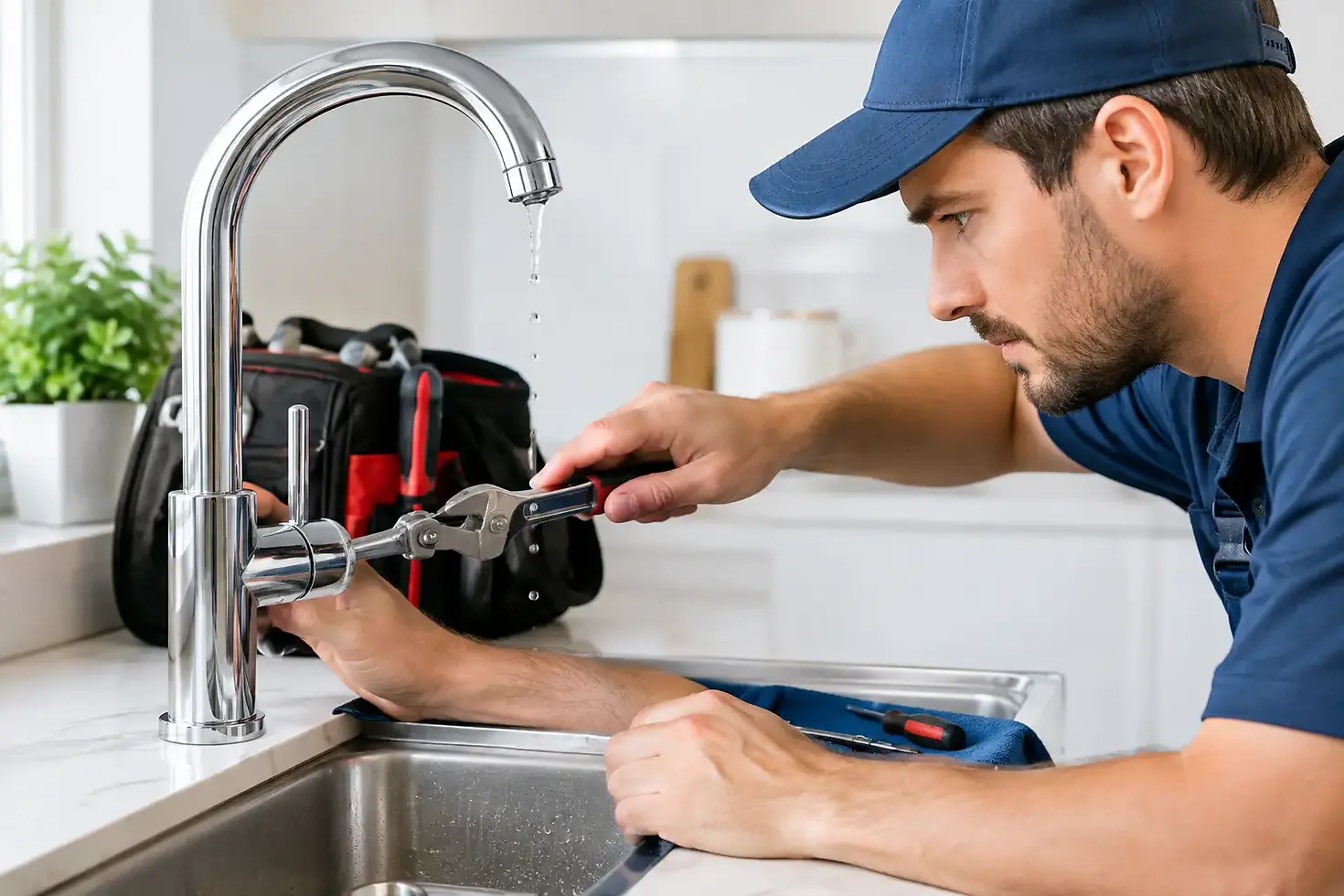
Leaky Faucet Repair Service When It Is Time to Call
A faucet that drips once every few seconds can seem like a minor annoyance, especially when the sink still works. But a leaky faucet repair service can prevent that small problem from becoming wasted water, a higher utility bill, cabinet damage, or a fixture that fails when you need it most. For homeowners and landlords, the right time to act is usually sooner than it feels.
A leak may come from a worn washer, cartridge, seal, valve, loose connection, or a damaged faucet body. The visible drip is only one clue. Finding and correcting the actual cause matters because a quick adjustment may quiet the noise temporarily without resolving the problem underneath.
Why a Dripping Faucet Deserves Attention
One steady drip can waste far more water than most people expect over weeks and months. In a busy household or rental property, that waste adds up quietly. More importantly, leaks around the base of a faucet or under the sink can reach places you cannot easily see, including the vanity, countertop seams, flooring, and wall behind the cabinet.
Wood cabinets absorb moisture and can swell, stain, or develop a musty odour. Particleboard vanities are particularly vulnerable. If the leak is in a kitchen sink cabinet, it may also affect stored cleaning supplies, filters, or nearby appliance connections.
The repair is often straightforward when caught early. Once water has damaged the surrounding area, however, the job can involve plumbing work plus drywall patching, cabinet repair, flooring replacement, or painting. Addressing the faucet early is the practical choice.
Signs You Need a Leaky Faucet Repair Service
A drip from the spout is the most familiar sign, but it is not the only one. Water collecting around the faucet base, a handle that feels loose or stiff, or a sink cabinet with damp spots all deserve attention. You may also hear a whistling sound, see corrosion around connections, or notice water pressure changing when you turn the handle.
A faucet that only leaks after it has been used can point to a worn internal part. One that drips constantly may have a cartridge or valve issue. If water appears below the sink only while the faucet is running, the problem may be the supply lines, drain fittings, or the faucet mounting itself rather than the spout.
Do not overlook a slow leak in a bathroom vanity. Many leaks are discovered only after a homeowner notices peeling cabinet material or a damp smell. At that stage, it is worth checking the shutoff valves, supply hoses, drain trap, and surrounding plumbing while the repair is being assessed.
Repair or Replace: What Makes Sense?
Whether a faucet should be repaired or replaced depends on its age, condition, and the availability of replacement parts. A quality faucet with a worn cartridge, washer, or O-ring is often worth repairing. The parts are commonly available, and the fixture may have years of dependable use left.
Replacement can make more sense when the faucet is heavily corroded, cracked, difficult to operate, or repeatedly leaking from different areas. It can also be a good opportunity to update an older kitchen or bathroom with a fixture that better suits how the space is used. A pull-down kitchen faucet, for example, may be helpful for a family kitchen, while a simple durable bathroom fixture can be a smart choice for a rental unit.
The trade-off is not only the purchase price. Replacing a faucet can involve removing an old fixture that has seized connections, cleaning up the mounting surface, installing the new unit properly, and testing for leaks. A clear assessment before work begins helps you decide whether repair or replacement offers better value.
When a Simple DIY Fix Is Reasonable
Some homeowners can handle a basic repair, such as replacing an accessible aerator or tightening a loose handle screw. Turning off the water supply first and following the manufacturer instructions are essential. Keep in mind that faucet designs vary widely, and using the wrong replacement part can create more trouble than it solves.
DIY work becomes less suitable when shutoff valves do not fully close, fittings are corroded, water is leaking inside a cabinet, or the faucet needs to be removed. A small amount of extra force can crack an old supply line, strip a fitting, or damage a countertop. If you are unsure where the water is coming from, professional help can save time and prevent an avoidable mess.
What a Professional Faucet Repair Visit Should Cover
A proper service visit should start with identifying the source of the leak, not simply replacing the first part that seems likely. The technician should test the faucet, inspect the connections under the sink, and check the shutoff valves where appropriate. This is especially useful when a leak has appeared more than once.
Once the cause is clear, you should know what work is recommended and what it will cost before proceeding. Depending on the issue, the repair may involve replacing internal components, securing the faucet, changing supply lines, resealing the base, or installing a new fixture. The faucet should then be tested under normal water pressure, with both hot and cold water running.
For homes with older plumbing, it can also be sensible to inspect nearby fixtures. A worn bathroom faucet may not mean every fixture needs replacement, but it can reveal that other original components are reaching the end of their useful life. For property owners managing several units, addressing these smaller maintenance items promptly can reduce emergency calls later.
Protecting the Area Around the Sink
After the leak is repaired, take a few minutes to check for water damage. Dry the cabinet thoroughly and remove any damp liners or stored items. If the cabinet bottom has swollen or softened, it may need repair before it deteriorates further.
It is also wise to look at caulking around the sink and backsplash. Failed caulking does not always cause a faucet leak, but it can allow splashed water to reach the counter or wall behind the fixture. In bathrooms, damaged caulking around a vanity can contribute to peeling paint and weakened drywall over time.
A professional home repair provider can handle these related tasks in one visit where practical. That means you are not left coordinating separate help for a leaky fixture, a damaged cabinet panel, and the finishing work that makes the space look cared for again.
Choosing Help You Can Trust
When inviting someone into your home, the repair itself is only part of the experience. Look for clear communication, an upfront estimate, punctual service, and respect for your space. The goal is not merely to stop a drip for the day. It is to complete the repair properly and leave the sink area clean, secure, and ready for regular use.
HandyDoc helps homeowners, landlords, and property managers across Hamilton, the GTA, and Southern Ontario with practical plumbing repairs and the related home fixes that often come with them. Whether the solution is a small faucet repair or a replacement with cabinet touch-ups, getting the right work done early keeps a simple leak from taking up more of your time and budget.


Comments